The landscape of American higher education has undergone a seismic shift. In 2026, the “starving artist” aesthetic of the college student has been replaced by the “digital architect.” With the National Center for Education Statistics (NCES) reporting that nearly 75% of undergraduate students now engage in at least one distance education course, the reliance on a robust digital infrastructure has never been higher. From the lecture halls of the Ivy League to bustling community colleges in California, the difference between a 4.0 GPA and academic burnout often comes down to the efficiency of one’s digital ecosystem.
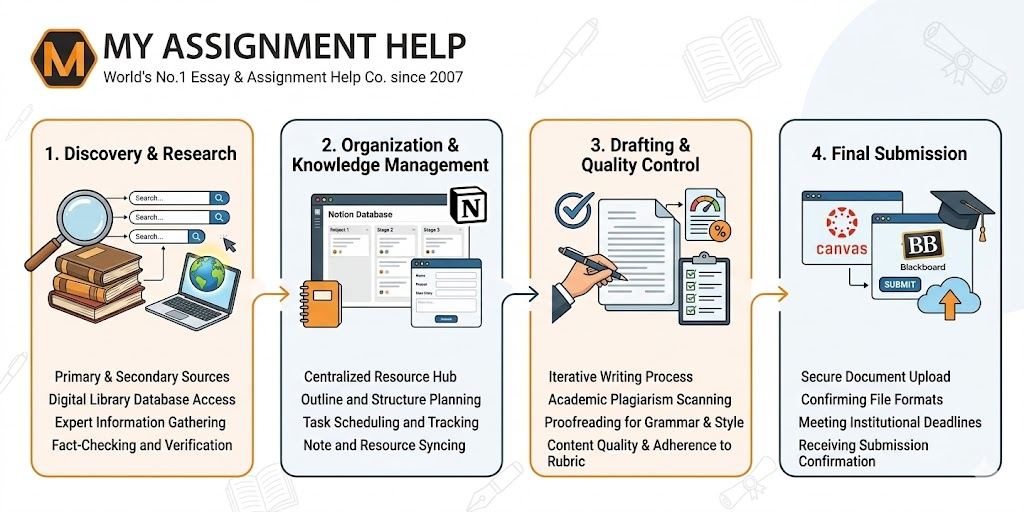
The modern academic journey is a high-stakes transition from a rough draft to a polished, professional submission. Navigating this requires more than just willpower; it requires a curated suite of tools designed to handle research, citation, and linguistic precision. For instance, before a student even submits their final work, utilizing a reliable paper checker in the USA has become a standard protocol to ensure that every essay meets the rigorous stylistic and integrity requirements of American faculty members. These tools act as a final gatekeeper, catching nuances in syntax and citation that the human eye might miss after a late-night study session.
The Data Behind the Digital Shift
To understand why certain tools are non-negotiable, we must look at the hard numbers. According to Pew Research Center, 93% of Americans say that being disorganized at school or work negatively impacts their stress levels. Furthermore, internal studies from US-based academic success centers indicate that students using automated organization tools see a 15% increase in on-time submission rates compared to those using manual methods.
1. High-Authority Research Acquisition
The foundation of any “A” grade paper is credible data. In the US, students are moving beyond basic search engines toward specialized repositories that provide verified, peer-reviewed evidence:
- Google Scholar & JSTOR: The primary hubs for accessing academic journals.
- Zotero: A critical tool for the “Experience” aspect of writing, helping you collect, organize, and cite research automatically.
- Statista & Data.gov: For students in business or social sciences, these provide validated US-centric data points that satisfy the “Authoritativeness” required by high-level professors.
2. The Synthesis Phase: Advanced Drafting
Writing is no longer a solitary act; it is a multi-stage synthesis of ideas. For complex senior theses or when students find themselves overwhelmed by overlapping deadlines, the strategic decision to buy a paper online from professional academic consultants has become a common resource. This provides students with a comprehensive blueprint or a high-quality reference model to guide their own writing process, ensuring they stay on track with complex prompts and US formatting standards.
Deep Dive: The Essential Toolkit Components
I. Productivity & Time Management
US college life is notorious for “The Grind.” According to the American Psychological Association (APA), nearly 60% of US students report experiencing “overwhelming anxiety.” To combat this, the following tools are essential:
- Notion: Serves as a “second brain” for syllabus tracking. Many US universities now provide official Notion templates for incoming freshmen.
- Forest: A gamified focus app that reduces the “context switching” that costs students up to 40% of their productive time.
II. Ensuring Credibility and Academic Rigor
Academic institutions now prioritize work that demonstrates deep knowledge and reliability. When writing for a US audience, your content must prove its value through quality control:
- Precision: Use industry-specific terminology to show a command of the subject (e.g., using “quantitative analysis” over “looking at numbers”).
- Trustworthiness: Ensure the paper is free of grammatical errors and follows APA 7th Edition or MLA 9th Edition guidelines strictly.
- Sourcing: Always anchor arguments in US-based government (.gov) or educational (.edu) sources to ensure regional relevance.
III. Financial Literacy and Resource Management
With the average cost of textbooks in the US still hovering around $1,200 per year, digital tools like Libby (for library ebooks) and Honey (for discounts on tech) are vital parts of the toolkit to keep student debt in check.
Key Takeaways
- Automate Quality: Never submit a first draft without running it through a specialized US-based paper checker.
- Centralize Research: Use tools like Zotero to avoid the “tab-clutter” that leads to cognitive fatigue.
- Manage Burnout: Recognize when the workload is unsustainable and seek professional academic resources to model your work after.
- Respect Integrity: Always prioritize original thought and use digital tools to enhance, not replace, your critical thinking.
The Future of Academic Submission
As we look toward the future of education, students are now learning to write with a focus on “Information Hierarchy.” This means structuring essays with clear headings, bullet points, and data-driven conclusions. This style mirrors professional content strategy, preparing students for the US workforce where digital communication and information architecture are paramount.
See also: Eco-Friendly Fashion Materials Explained
Frequently Asked Questions (FAQ)
Q1: Is it common for US students to use paper checking software?
Yes. Over 90% of US colleges recommend or provide access to some form of digital proofreading tool to help students adhere to academic standards and grammar rules.
Q2: How do I ensure my paper meets US university standards?
Ensure you are using US English (e.g., “analyze” instead of “analyse”) and adhering to the specific citation style (APA, MLA, or Chicago) requested in your syllabus.
Q3: Can these digital tools help with information organization?
Absolutely. By using tools that help structure your data and headings, you are naturally making your content more readable for both professors and modern search algorithms.
Q4: Are there resources for students facing heavy academic pressure?
Many students utilize professional writing services to obtain reference papers. This helps them understand complex topics and structure their own original work more effectively.
References & Sources
- National Center for Education Statistics (NCES) – Fast Facts: Distance Education (2025-2026).
- Pew Research Center – The Digital Lives of American College Students.
- American Psychological Association (APA) – Student Stress and Mental Health Trends in Higher Education.
Author Biography
Liam Henderson is a Senior Academic Consultant and Content Architect at MyAssignmentHelp. With over a decade of experience in the US educational sector, Liam specializes in helping students navigate the complexities of digital research and advanced writing strategies. He is a passionate advocate for leveraging technology to reduce student stress and enhance the overall quality and trustworthiness of academic submissions.